
Commercial Property Insurance Online :: News
SHARE

Share this news item!

NSW Emergency Levy Reform Puts Retail Premiums Back in Focus

Paige Estritori explains why the committee’s report matters for shop owners reviewing premiums, leases and renewal budgets.

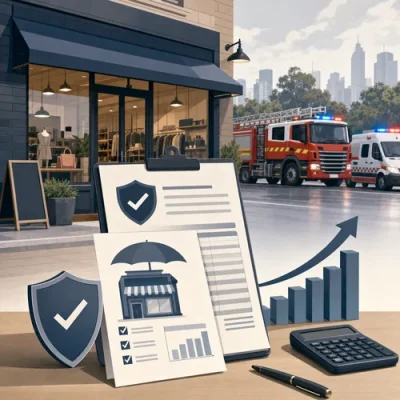
NSW Emergency Levy Reform Puts Retail Premiums Back in Focus?w=400

The information on this website is general in nature and does not take into account your objectives, financial situation, or needs. Consider seeking personal advice from a licensed adviser before acting on any information.

A New South Wales parliamentary committee has tabled a fresh report recommending that the state replace its insurance-based Emergency Services Levy with a broader funding model for emergency services.
For retailers, cafés, convenience stores and other shopfront businesses, the development is important because the levy is currently embedded in many insurance costs, but any replacement system could shift expenses rather than simply remove them.

The committee’s report, tabled on 18 November 2026, recommends that the next NSW Parliament adopt a new funding source that is equitable, efficient, simple and sustainable. It also recommends decoupling emergency services funding from insurance premiums and making Revenue NSW responsible for collecting and administering any replacement levy. That is a significant policy signal, but it is not yet legislation. The government response is due in May 2027, and the final design, timing and transition rules remain unresolved.

The current levy has long been criticised by insurers and business groups because it increases the cost of taking out insurance. The report notes that the levy adds to the base premium and then affects the amount on which other taxes are calculated. For insured businesses, that can make insurance feel more expensive at exactly the point where owners are trying to manage weather, fire, theft, liability and interruption risks. This is why the broader debate about insurance taxes remains relevant to small retailers.

However, shop owners should be cautious about assuming that reform would automatically reduce total business costs. A property-based levy may be collected differently and could appear through rates, landlord outgoings or commercial property charges, depending on the final model and lease arrangements. The committee also acknowledged concerns that commercial, industrial and agricultural property owners should not be adversely affected by a replacement levy.

For tenants, the practical issue is not only the premium line on an insurance schedule. Lease clauses may allow landlords to recover government charges, building insurance, emergency services costs or statutory outgoings. A lower insurance premium could be offset by a separate property-related charge if the replacement levy is passed through under a lease.

Retailers reviewing renewals should consider:

  • whether the Emergency Services Levy is shown separately on insurance invoices or bundled into the premium;
  • how lease outgoings are defined and whether new statutory charges may be recoverable;
  • whether sums insured for stock, fit-out, glass and business interruption still reflect current replacement costs;
  • how any premium change affects overall shop insurance cost, rather than focusing on one tax component alone.

The reform process is worth watching because it could improve transparency and affordability over time. For now, the safest interpretation is that NSW has moved closer to changing how emergency services are funded, but shop owners should wait for the final legislation before building savings into budgets.

Published:Thursday, 19th Nov 2026
Author: Paige Estritori

Please Note: We do not endorse any specific products or companies. Some content is sourced from third parties, including press releases, and may not be independently verified for accuracy or completeness.

Share this news item:

Rate this article

0 Comments

No comments yet. Be the first to share your thoughts.

Insurance News

New Safety Hub Turns Truck Incidents Into Risk Lessons
19 Nov 2026: Paige Estritori
The NHVR’s new Safety Hub, launched on 18 November 2026, gives Australian heavy vehicle operators a more central source of incident learnings, safety alerts and practical guidance. For truck owners and fleet managers, the insurance relevance is indirect but important: clearer safety information can help turn compliance activity into documented risk management, which may matter at renewal time and when a serious claim is reviewed. - read more
New Safety Data Puts Construction Risks Back in Focus
19 Nov 2026: Paige Estritori
Safe Work Australia’s latest national work health and safety statistics have put construction risk back in sharp focus, with the 2026 release showing that serious injuries and fatalities remain a major issue for the sector. For Australian tradespeople, the figures are not just safety data. They are a practical reminder that risk management, site documentation and insurance settings all need regular attention. - read more
Underpaid claims put policy calculations under scrutiny
19 Nov 2026: Paige Estritori
A newly published Life Code Compliance Committee sanction has put a practical issue back in front of Australian workers who rely on income protection insurance: a successful claim still depends on the insurer calculating and paying the correct benefits. The de-identified case, reported in mid-November 2026, involved about $1.6 million in underpayments, including interest, across 66 income protection and death benefit claims. - read more
New NHVR Safety Hub Gives Fleets More to Prove
19 Nov 2026: Paige Estritori
The National Heavy Vehicle Regulator’s launch of a new Safety Hub on 18 November 2026 gives Australian truck operators another reason to treat safety evidence as a living business record, not a folder updated only before an audit. For fleets, owner-drivers and transport managers, the development matters because insurers increasingly look beyond the vehicle itself and ask how risk is identified, acted on and reviewed. - read more
AI Advice Surge Raises New Questions for Business Life Cover
19 Nov 2026: Paige Estritori
The life insurance industry's latest warning about artificial intelligence should matter to business owners as much as households. On 18 November 2026, the Council of Australian Life Insurers said its latest Life Insurance Sentiment Tracker showed AI use for financial advice among life insurance advice recipients had risen by 80 per cent, reaching nearly one in three people. - read more


Commercial Property Insurance Articles

Natural Disasters and Your Commercial Property: Is Your Insurance Adequate?
Australia is known for its diverse landscapes, but one of the harsher realities it faces is the increasing frequency of natural disasters. From bushfires in the outback to devastating floods in urban areas, these events can have severe implications for commercial properties. Business owners must navigate the challenges of not only protecting their assets but also ensuring the continuity of their operations. - read more
How Deductibles Impact Your Commercial Property Insurance Premiums
When it comes to commercial property insurance, a deductible is the amount of money a policyholder agrees to pay out-of-pocket before the insurance coverage kicks in. This can be a fixed dollar amount or a percentage of the total insured value. Understanding how deductibles work is crucial for any landlord or business owner seeking to protect their assets effectively. - read more
What Factors Affect Commercial Property Insurance Premiums?
Commercial property insurance is designed to protect businesses and landlords against losses to their buildings and other related assets. This type of insurance covers various incidents, such as fire, theft, and damage from natural disasters. It's essential for safeguarding not just the physical property but also the livelihood associated with the business operations conducted within that space. - read more
What does Commercial Property Insurance cover?
Commercial property insurance is vital for anyone who owns or operates a business that involves a physical location. This type of insurance protects your business premises, equipment, and any inventory within the space. Whether you're a landlord, a small business owner, or a property investor, having a solid understanding of commercial property insurance is essential. It not only safeguards your physical assets but also provides peace of mind for your financial investment. - read more
How commercial property insurance sums insured and replacement costs work
Commercial property sums insured should reflect the likely cost to reinstate or replace insured property, not simply its market value. This guide explains replacement cost, reinstatement value, underinsurance risk and average clauses for Australian commercial property owners. - read more

Knowledgebase
Coinsurance:
A percentage of the cost of a covered healthcare service that you pay after you have paid your deductible.